

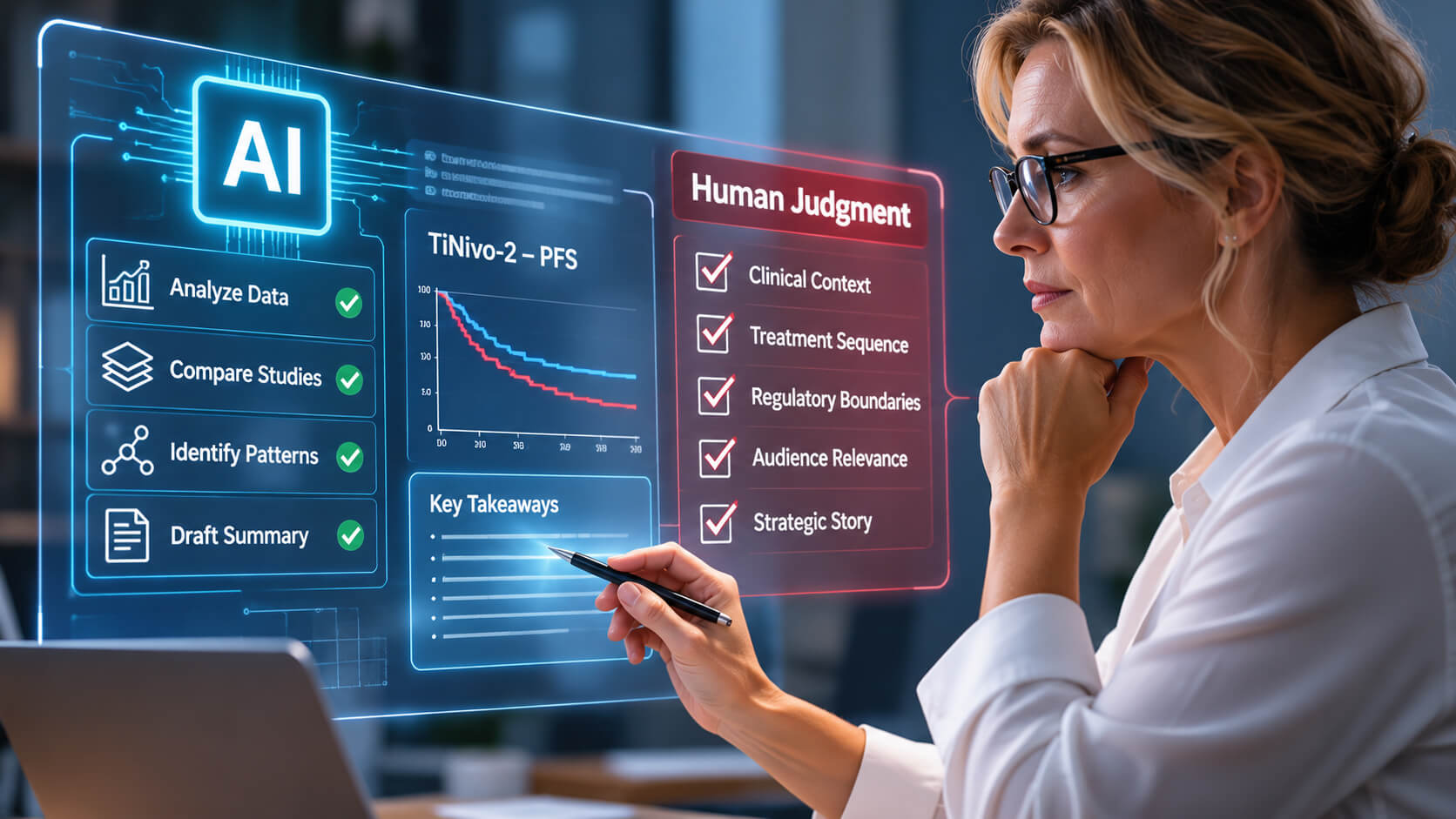
In life science communications, AI can organize complexinformation, analyze datasets, compare studies, identify patterns and produce afirst draft in seconds. We use it. Our clients use it. And its capabilitieswill only improve. But speed creates a temptation: confusing a faster answerwith a better one. That's particularly risky when communicating clinicaldata, where the most obvious headline doesn't always tell the whole story.
TiNivo-2: Look beyond the headline
Consider the Phase 3 TiNivo-2 study in renal cellcarcinoma (RCC). The trial did not meet its primary endpoint. Addingnivolumab to tivozanib did not improve progression-free survival compared withtivozanib alone. An AI-generated summary could reasonably stop there.
An experienced oncology communicator shouldn't.
Look more closely at the control arm. Tivozanibmonotherapy demonstrated clinically meaningful activity in patients previouslytreated with immunotherapy, adding important evidence about its potential rolein an evolving RCC treatment sequence. The more interesting question isn't simply whether thetrial succeeded or failed. It's what the totality of the data tells us abouttivozanib's place in clinical practice. That's where experience matters.
The difference between information and interpretation
AI can retrieve historical studies, compare clinicalendpoints and organize complex findings remarkably quickly. But effective clinical communications requiresunderstanding what those findings mean. What's statistically significant versus clinicallymeaningful? How does a result compare with existing treatment options? What canappropriately be claimed within regulatory boundaries? Which findings mattermost to oncologists, patients, investors or journalists?
These aren't simply writing decisions. They're strategicdecisions informed by scientific knowledge, regulatory experience and anunderstanding of the competitive landscape. AI accelerates the analysis. Experience gives it context.
Accuracy matters more when everything moves faster
The faster information can be generated, the moreimportant experienced review becomes. Mischaracterizing an endpoint, overstating clinicalsignificance or crossing a regulatory boundary can undermine credibility. Humanoversight isn't about slowing AI down. It's about making its speed morevaluable. That means questioning assumptions, verifying scientific claims andrecognizing when an apparently straightforward result deserves deeperexamination.
Trust isn't something you can automate
Even the most sophisticated AI-generated content mustultimately connect with people. Journalists, clinicians, key opinion leaders and patientadvocates are navigating an unprecedented volume of information and automatedoutreach. Relevance matters. Credibility matters. Relationshipsmatter.
An experienced communications professional knows whichreporter understands a particular therapeutic area, which expert can providemeaningful perspective and how to approach sensitive clinical findingsresponsibly. AI can help develop apitch. It cannot substitute for the trust earned through years of deliveringaccurate, relevant information.
The future is human expertise amplified by AI
The future of life science communications isn't aboutchoosing between artificial intelligence and human expertise. It's aboutcombining their strengths. AI brings extraordinary speed and analyticalcapabilities. Experienced professionals contribute scientific context,regulatory judgment, strategic interpretation, creativity and relationships. Together, they make communications more informed,efficient and effective.
AI expands what we can see. Experience determines what wedo with it. That's the balance we believe will define the nextgeneration of life science communications.